TL;DR – A solar quote is not just about price per watt. The best solar quote clearly explains:
- Your actual energy usage and system sizing
- Real production estimates based on your home
- Transparent solar pricing and costs (cash vs financing)
- Full scope of work with no surprises later
- Accountable warranties and equipment quality
If your quote is vague, generic, or overly simplified, it may be missing important assumptions.
Table of contents
- Why comparing a solar quote is harder than it looks
- Solar pricing and costs: do not rely on price per watt alone
- System sizing and energy usage: this is everything
- Production modeling: not all estimates are equal
- Financing options: understand the real cost
- Scope of work: avoid surprise costs
- Warranties and equipment quality: do not over focus on model numbers
- Incentives, credits, and financing: build them into the plan
- The real solar quote checklist
- Solar quote FAQs
- Final thought
Why comparing a solar quote is harder than it looks
Most homeowners treat a solar quote like a product purchase.
It is not.
It is closer to a construction, energy, and financing project combined. That is why two quotes with the same system size can produce completely different outcomes.
A cheap quote can cost more long term if:
- The system is undersized
- Production is overestimated
- Financing hides real costs
- Scope items get added later
That is where a proper checklist matters.
Solar pricing and costs: do not rely on price per watt alone
If you have looked at solar quotes online, you have likely seen price per watt used as a quick way to compare systems. It is a useful baseline, but it does not capture everything.
What forums like Reddit get right:
Comparing cash price divided by system size is a good baseline.
Where they fall short:
A strict rule that anything above a certain dollar amount, such as $3.00 per watt, is not reliable in Canada.
In Alberta, pricing varies based on:
- Roof complexity and pitch
- Shading and layout constraints
- Electrical upgrades such as main panel or meter base
- Equipment selection
- Installation quality and warranty coverage
A better question:
What is driving the cost, and is it justified?
System sizing and energy usage: this is everything
If your system sizing and energy usage are not accurate, nothing else matters.
What a proper solar quote should include:
- Trailing 12 months of electricity usage (your electricity bills)
- Seasonal usage patterns
- Local production modeling, not generic estimates
- Realistic offset expectations
Red flag:
Quotes based on:
- Square footage
- Average home assumptions
- Overly round numbers, such as this covers 100 percent
In Alberta, production depends heavily on:
- Roof orientation and tilt
- Solar Club rate strategy
- Snow and winter production dips
Production modeling: not all estimates are equal
Production estimates should be location specific and realistic.
A strong solar panel installation estimate includes:
- Irradiance data for your region
- Roof azimuth or direction and tilt
- Shading analysis
- Conservative assumptions, not best case scenarios
If your quote does not explain how production was calculated, it is not reliable.
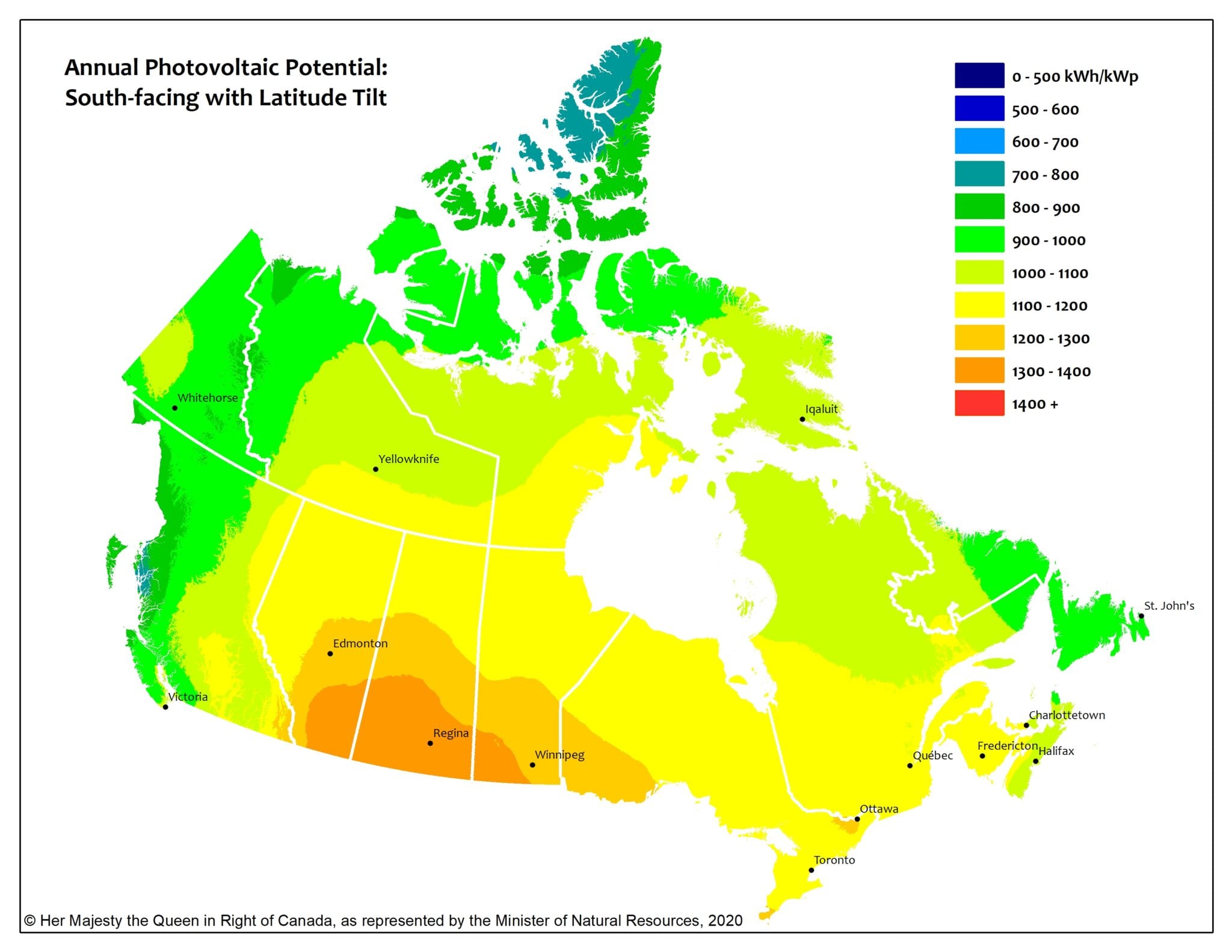
Data source: Photovoltaic potential and solar resource maps of Canada
What a typical solar quote includes (Alberta example)
Here is an example based on a typical Alberta home. Final results will vary based on your roof, energy usage, and rate strategy.
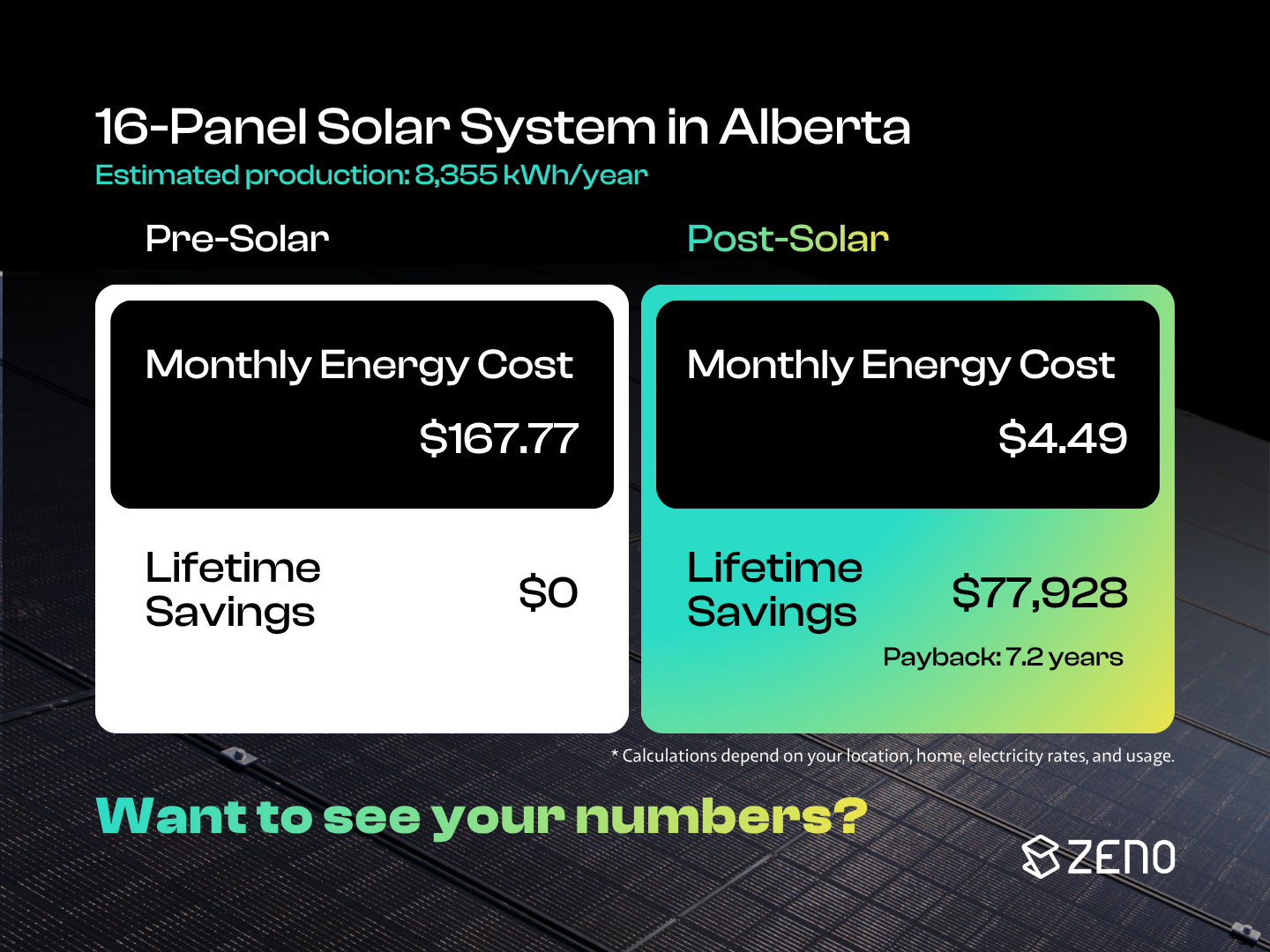
- Average monthly electricity bill: $167.77 before solar → ~$4.49 after solar (cash scenario)
- Estimated system size: 16 panels (~6.4 kW)
- Estimated annual production: ~8,355 kWh
- Estimated offset: ~100% of annual usage
- Estimated payback period: ~7.2 years
- Estimated 25-year savings: ~$77,928
This is where solar quotes often differ. Small changes in system sizing, production assumptions, or rate strategy can significantly impact long-term savings.
Run your estimate with our solar energy savings calculator.
Financing options: understand the real cost
This is where most homeowners get caught.
What public forums get right:
You need to compare the cash price versus the financed price.
What to look for:
- Financing fees are built into low interest loan options and reflect the cost of reducing the interest rate through the lender.
- Total repayment cost over time
- Payment structure, including pre-install versus post-install
- Flexibility, such as early payoff options or penalties
A low monthly payment does not always mean a better deal. What matters is understanding the total cost and how the financing is structured.
Scope of work: avoid surprise costs
This is one of the biggest gaps in many solar quotes.
Your quote should clearly state:
- Whether a main panel upgrade is included
- How conduit will be run
- Whether permits and inspections are included
- What happens if site conditions change
Red flag:
Vague language such as:
- If required
- To be determined
This is where projects go over budget.
Warranties and equipment quality: do not over focus on model numbers
Online forums push for exact model numbers, but there is nuance.
Reality:
Equipment models can change due to supply chain availability. Locking exact models too early is not always practical.
What actually matters more:
- Performance guarantees
- Workmanship warranties
- Approved equipment standards
- Installer accountability
A strong solar quote protects you with warranties and equipment quality, not just model names.
Incentives, credits, and financing: build them into the plan
Your solar quote should reflect real world savings.
In Alberta, that includes:
- Micro generation credits: Homeowners receive bill credits for exported electricity, with the credit rate based on their electricity retailer and rate plan
- Solar Club rate strategy: Eligible solar homeowners can switch between seasonal high and low electricity rates to better align with summer exports and winter imports
- Municipal financing programs such as CEIP where available: These can finance up to 100 percent of eligible project costs and are repaid through property taxes
If these are not clearly explained, your return on investment is incomplete.
The real solar quote checklist
Before signing any solar quote, make sure you can confidently answer:
- Is the pricing clearly explained beyond price per watt?
- Is the system based on my actual energy usage?
- Are production estimates realistic and location specific?
- Do I understand the true cost of financing?
- Is the full scope of work defined?
- Am I protected by strong warranties and equipment quality?
- Are incentives, credits, and financing properly factored in?
If not, pause.
Also, many residential solar contracts offer a 10-day cooling period, giving you time to review and cancel without penalty. Always confirm this in your agreement prior to signing.
Why this matters
A solar quote is not just about getting panels on your roof.
It is about:
- Getting the right system size
- Producing accurate long term savings
- Avoiding hidden costs and surprises
That is the difference between a system that looks good on paper and one that actually performs for 30 years or more.
Solar quote FAQs
What should be included in a solar quote?
A solar quote should include system size, production estimates based on your energy usage, total cost including cash and financed options, equipment details, scope of work, and warranty coverage.
What is a good price per watt for solar in Canada?
There is no single good price per watt. Most systems fall within a typical range, but pricing depends on roof complexity, equipment, and installation scope. It is more important to understand what drives the cost.
How accurate are solar production estimates?
Accurate estimates are based on your historical energy usage, local weather data, and roof characteristics. Generic estimates without this data are less reliable.
Final thought
If a solar quote feels too simple, it is probably missing something.
The right partner will not just give you a number. They will walk you through the assumptions behind it.
Want a solar quote you can actually trust? Request your free, data-backed solar proposal & design tailored to your home, energy needs and real Alberta conditions.