TL;DR – The install solar panels cost for most homeowners in Canada typically ranges from $15,000 to $30,000+, with many installs falling between $18,000 and $25,000 depending on system size, roof type, and components. Incentives, financing programs, and energy savings can significantly reduce the effective cost over time. Solar often makes financial sense, but the outcome depends on your home, your energy use, and how long you plan to stay in your home.
Table of contents
- What does install solar panels cost actually mean
- Average cost of solar installation in Canada
- What affects solar panel installation cost
- Equipment choices and their impact on cost
- Incentives and financing that reduce costs
- Long-term savings and payback period
- When solar may not be worth it
- How to estimate your own solar cost
- Understanding your next step
- Key takeaways
What does install solar panels cost actually mean
When homeowners search for install solar panels cost, they are usually trying to answer one question: How much will solar actually cost me, and will it save money?
The answer is not one fixed number. Solar pricing depends on:
- How much electricity your home uses
- How much roof space you have
- The type of system installed and its components
- Your location and incentives available
In simple terms, solar is priced based on system size, measured in kilowatts (kW). A larger home with higher usage needs a bigger system, which increases upfront cost but also increases savings.
Average cost of solar installation in Canada
In most Canadian markets, including Alberta and Ontario, the install solar panels cost typically falls within the following ranges:
| System Size | Typical Cost (pre-incentive) | What this usually means |
| 4–6 kW | $12,000–$18,000 | Lower electricity usage, lower occupancy |
| 6–8 kW | $18,000–$26,000 | Most households with average usage |
| 8–10 kW | $26,000–$35,000+ | Higher usage homes with EVs or larger families |
These are pre-incentive estimates and include equipment, labour, permits, and grid connection.
System size is based on electricity usage, not home size, so two similar homes can require very different systems.
In practical terms, most homeowners install systems in the $18,000 to $25,000 range, depending on their energy use and location.
Over the past decade, solar has become more affordable as technology has improved and adoption has increased. In Canada, real project data shows that renewable energy costs have been cut roughly in half over the last 10 years. According to the Pembina Institute, renewables are now among the most cost-competitive sources of new electricity generation.

What affects solar panel installation cost
1. system size
This is the biggest driver of cost.
- More electricity usage = larger system
- Larger system = higher upfront cost
- But also higher long-term savings
2. Roof type and complexity
Your roof matters more than most people expect.
Factors that increase cost:
- Steep roofs
- Multiple angles
- Shading from trees or chimneys
- Older roofs needing upgrades
3. Installation location
Where you live affects both cost and performance.
- Provinces with higher electricity rates see faster payback
- Solar production varies by sunlight exposure
- Permitting and local policies can impact pricing
4. Labour and installation quality
Lower quotes are not always better.
Experienced installers may cost more, but often provide:
- Better and accurate system design
- Higher long-term performance
- Stronger warranties for all components
With over a decade in business, we back our work with a lifetime craftsmanship and labour warranty, a 5% production guarantee, and a price-match guarantee – along with ongoing support after installation so you’re never left on your own.
Equipment choices and their impact on cost
Not all solar systems are built the same. Equipment decisions directly influence install solar panels cost.
Panels
- Standard panels are most cost-effective
- Premium panels cost more but can produce more energy in less space
Inverter types
There are two main approaches:
- Microinverters
- Convert power at each individual panel
- Maximize production when panels face different directions or get shade
- More flexible and easier to expand later
- Slightly higher upfront cost
Best for: complex roofs, partial shading, or homeowners who want maximum performance
- String inverter with optimizers
- Panels send power to a central inverter, with optimizers supporting each panel
- Lower upfront cost in many cases
- Improves performance in partial shading without full system complexity
- Proven, reliable setup used in many homes
Best for: simple roof layouts and homeowners looking for strong performance at a better price
Mounting system
Roof-mounted systems are the most common and cost-effective option. Ground-mounted systems cost more due to additional materials and labour. Trenching can also increase costs, for example when wiring needs to be run underground from the panels to your home’s electrical system. Ground mounts may also require permits, concrete footings, or extra racking, all of which add to the overall install solar panels cost.
Incentives and financing that reduce costs
This is where the conversation shifts from price to real cost after support.
Government programs
Canada has offered various provincial and municipal incentives in some regions, which can help reduce the upfront cost of going solar. These programs change frequently and are often limited in availability, so timing can matter. At Zeno, we keep a close eye on current programs and help homeowners understand what incentives they may qualify for as part of the process.
Local programs and utilities
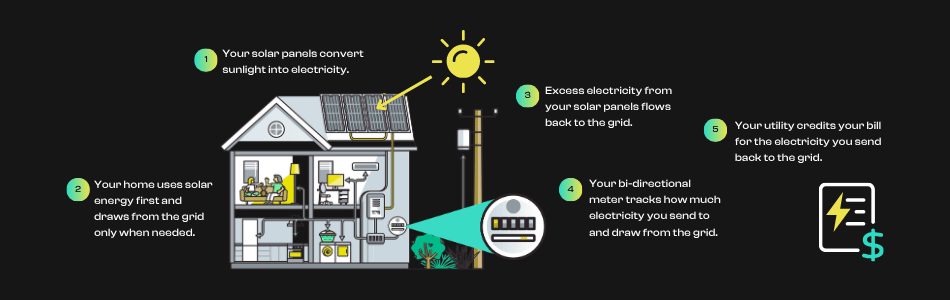
Programs like micro-generation and net metering allow homeowners to get more value from their solar system over time. In most cases, you:
- Use your solar energy in your home first
- Send excess electricity to the grid
- Receive bill credits for the power you export
These credits help offset the electricity you use when your system is not producing, like at night or during winter, improving long-term savings.
In Alberta, homeowners can also take advantage of programs like Solar Club™, which allows you to switch between higher and lower electricity rates throughout the year. This means you can earn more for the energy you export during high-production months and pay less when you are using more from the grid, helping maximize overall savings.
As of April, 2026, the Solar Club™ HI Rate is 35.00¢/kWh, designed for club members exporting excess electricity to the grid.
In Ontario, net metering programs allow homeowners to earn credits at their retail electricity rate, which can be applied to future bills. While incentive programs vary by utility and change over time, some regions offer rebates or support through local utilities and energy programs. These can help reduce upfront costs or improve overall return on investment.
Overall, how your local utility values your excess energy plays a major role in how quickly your system pays for itself.
How Micro-generation / Net Metering Works
Financing options
Instead of paying upfront, many homeowners choose to finance their system over time. Common options include:
- Monthly financing through our in-house provider offering preferred rates
- Property-based financing programs like the Clean Energy Improvement Program (CEIP), where repayment is tied to your property tax bill (offered by select municipalities in Alberta)
These options spread the install solar panels cost over time, often aligning monthly payments with your energy savings, making it easier to get started without a large upfront investment.
Long-term savings and payback period
The real value of solar is not just cost. It is what happens after installation.
Typical payback period
Most homeowners see payback in:
- 6 – 9 years in strong solar regions like Calgary
- 8 – 12 years in moderate regions like Mississauga
Lifetime savings
Modern solar panels are designed to last 25 – 30+ years, with many systems continuing to produce electricity beyond that, although at slightly reduced efficiency over time.
That means:
- Decades of reduced electricity bills
- Greater control over your long-term energy costs
- Protection against rising utility rates
Most panels come with performance warranties that guarantee around 80% – 90% of their original output after 25 years, which helps ensure consistent long-term savings.
Over the lifetime of the system, these savings can add up significantly. While exact results vary by home and location, many homeowners offset a large portion of their electricity costs over time.
For Canadian homeowners, the long-term value is also influenced by local policies like micro-generation or net metering, which allow excess energy to be credited back to your bill, further improving overall savings.
Property value impact
Homes with solar often:
- Sell faster
- Attract energy-conscious buyers
- Command higher resale value in some markets
Do Solar Panels Increase Home Value in Canada? 7 Insightful Facts Homeowners Should Consider
Research and real estate data show that homes with solar installations tend to sell at a premium compared to similar homes without solar, particularly when the system is owned and in good condition. In many cases, value increases are tied to the long-term energy savings the system provides and the growing demand for energy-efficient homes.
When solar may not be worth it
Let’s be honest. Solar is not the right fit for every home.
Situations where it may not make sense include:
- Very low electricity usage: Smaller energy bills mean smaller savings, which can extend the payback period.
- Heavily shaded roofs: Trees, nearby buildings, or roof obstructions can reduce production and limit overall system performance.
- Plans to move within a few years: Solar is a long-term investment, and shorter timelines may not allow you to fully recover the upfront cost.
- Limited roof space or poor orientation: Not enough usable roof area, or roofs that face away from the sun, can limit how much energy your system can produce.
- Older roof with no plans to replace it: If your roof needs replacement soon, installing solar first can lead to additional costs to remove and reinstall the system.
In these situations, the install solar panels cost may outweigh the financial benefits, or the timeline to see meaningful savings may be longer than expected.
How to estimate your own solar cost
This is where most homeowners get stuck.
You can read guides all day, but your actual cost depends on your home.
Our Solar Savings Calculator can help estimate:
- System size
- Installation cost
- Potential savings
- Payback period
It is one of the fastest ways to move from general information to real numbers.

Understanding your next step
At some point, you will want clarity beyond estimates. If the time is now, we encourage you to request a free solar estimate and design for your roof.
A Free Solar Quote can help you:
- Understand your exact system size
- See real pricing for your home
- Compare equipment options
- Evaluate savings with local incentives
This is not about committing. It is about getting accurate information.
Making a confident decision
By now, you should have a better understanding of install solar panels cost and what actually drives it. The primary takeaway is this: solar is not just an expense – it’s a long-term financial decision and an investment in your energy independence.
The right system can:
- Reduce your monthly bills
- Stabilize your energy costs
- Increase your home value
But the wrong system, timing or poor evaluation of your situation can lead to frustration.
Key takeaways
- Install solar panels cost typically ranges from $15,000 to $30,000+, with most homeowners falling between $18,000 and $25,000, depending on system size
- Cost is driven by electricity usage, roof type, equipment, and location
- Incentives and financing can significantly reduce upfront cost
- Many homeowners see payback in under 10 to 12 years, with faster timelines in strong solar regions
- Solar is not ideal for every home, especially with low usage or heavy shading